Top pick![]()
5.00 / 5
Licence
Payout
18+ · T&Cs apply
 18+ · UK
 Reel Time Gaming
Play responsibly. You must be of legal age to gamble in your jurisdiction.
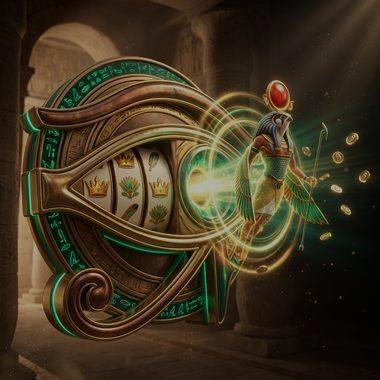
Eye of Horus is a five-reel Slot game from Blueprint Gaming, built around expanding symbols, cascading wins and an Egyptian theme. Our game uses a 5x3 layout with five paylines, creating a compact round structure that is easy to follow while still allowing feature rounds to develop over several drops. Sessions usually move at a moderate pace, with regular spins joined by occasional scatter outcomes, free spins and larger symbol combinations. The medium volatility profile gives the format a balanced risk character, while the expanding-symbol mechanic creates the most distinctive changes in the visual and mathematical flow.
Every operator below carries this title in real-money mode. Licence and payout are stated on the row; full terms on the operator site.
18+ · T&Cs apply
18+ · T&Cs apply
18+ · T&Cs apply
18+ · T&Cs apply
18+ · T&Cs apply
18+ · T&Cs apply
We may earn a commission if you sign up. It never affects the ranking.
Released in 2012, Eye of Horus combines familiar slot foundations with a feature system centred on symbol expansion. Standard spins provide the main rhythm, while special symbols can increase the reach of winning combinations and trigger additional opportunities. The structure is suitable for desktop, mobile and tablet play, with bet size and autoplay listed as the main player controls. Monetary play in the UK should always take place through an appropriate regulated environment, with limits and session awareness kept central to the experience.
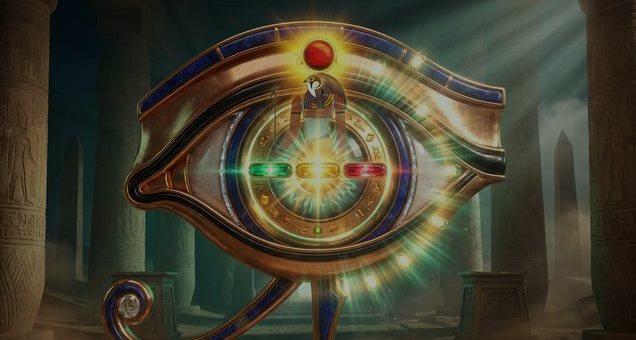
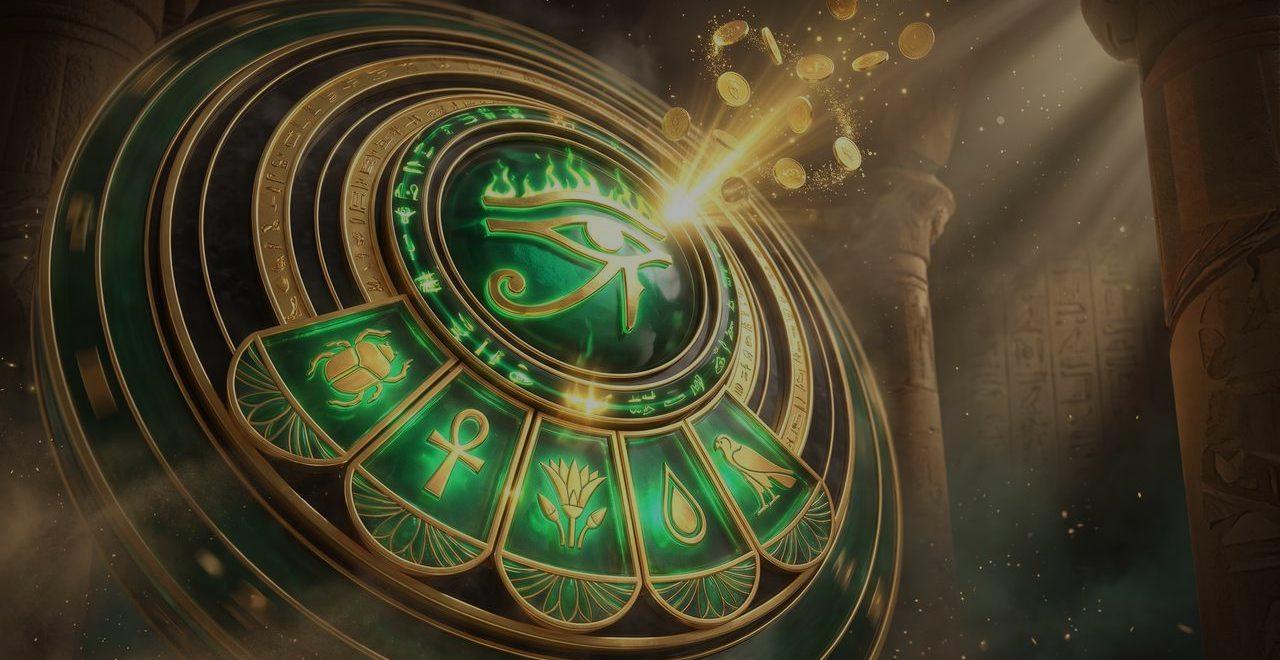
Eye of Horus places a classic Egyptian setting around a straightforward five-reel slot format. The reels contain standard paying symbols alongside special symbols that influence the way combinations are formed. Five paylines keep the winning structure relatively clear, so the result of each spin can be understood without a large number of separate lines or complicated calculation steps.
Its central identity comes from expanding symbols. When the mechanic is active, a symbol can occupy more reel positions than it does during a standard result. That change can increase the number of matching positions and may help create wins across the available paylines. Cascading wins add another layer, as winning symbols can be removed or resolved through successive drops, allowing the same round to continue rather than ending immediately after the first combination.
From a gameplay perspective, the release is designed around contrast. Regular spins may produce small wins from ordinary symbols, while feature outcomes can create a stronger sense of movement as symbols expand and new positions are filled. The session pace remains moderate rather than extremely fast, giving each result enough space to show how the reels have changed.
Blueprint Gaming is identified as the provider, and the release date is recorded as 2012. Compatibility includes desktop, mobile and tablet devices, which supports a consistent format across common screen sizes. The core layout remains five reels by three rows, keeping the visual arrangement familiar even when expanding symbols or cascading outcomes alter the result.
Eye of Horus is listed for the UK market as a Slot game supplied by Blueprint Gaming. Legal access depends on the operator, the player’s location, age and the rules applied by the relevant UK gambling framework. The supplied game information does not identify a specific casino, licence number or access condition, so those details cannot be assigned to the title itself.
In practice, the important distinction is between the game and the service hosting it. A slot can be available through one operator while being unavailable through another because of commercial arrangements, licensing, technical restrictions or changes to a provider’s distribution network. The availability of Eye of Horus should therefore be checked within the chosen operator’s own account and game environment before any deposit is considered.
Age verification and identity checks may form part of the account process. Payment access, geographic availability and responsible-play controls can also differ between operators. Those conditions are not properties of the reel layout, RTP or feature design, and the available game data does not provide a complete legal assessment for every individual circumstance.
Responsible participation remains important in every legal market. A session can be kept within a defined financial and time boundary, with deposit limits, loss limits or reality checks used where available. If gambling stops feeling controlled or begins to affect essential spending, relationships or everyday responsibilities, external support should be sought before further play takes place.
The round flow is based on selecting a stake, starting the reels and assessing the resulting symbols across five paylines. Bet size is recorded as a player control, while autoplay is also listed among the available controls. The precise stake range is not included in the supplied game data, so exact minimum or maximum betting figures should not be assumed.
Standard symbols form the basic outcome layer. A regular result may create a small win without activating a larger feature, or it may lead into a sequence where symbols expand and further drops are resolved. The five-payline structure makes the result relatively readable, although expanding positions can change the appearance of the reels compared with a standard spin.
Autoplay can alter the pace by starting successive rounds automatically. Its presence does not change the RTP or volatility of the game, but it can reduce the amount of time available for manual reflection between results. For that reason, any autoplay setting is best considered a pacing option rather than a method for improving outcomes.
Eye of Horus does not provide a predictable pattern that can identify the result of a future spin. Each round should be treated as an individual event within the recorded risk profile. Previous cascades, free spins or expanding-symbol wins do not make another feature more likely simply because they occurred earlier in the session.
The supplied game data does not confirm the availability of a free demo version of Eye of Horus. Demo access can depend on the operator, device, region and provider arrangement, so it should not be presented as a guaranteed feature of the release. Where a non-monetary mode is offered by an authorised service, its purpose is normally to show the interface and round flow without using a cash balance.
A demonstration mode can make the expanding-symbol and cascade mechanics easier to understand. It can also show how the five reels, three rows and five paylines are arranged before a real-money balance is involved. The result experience may resemble the cash version, although the surrounding account conditions, promotional restrictions and available controls can differ.
No claim is made here that demo play is present on every UK platform. The safest description is that availability must be confirmed at the point of access. A free mode, when displayed, should not be interpreted as evidence of future cash outcomes, a promise of a particular win rate or a substitute for financial limits.
For players assessing the format, the main points to observe are the speed of regular spins, the way symbols expand, the presentation of cascading wins and the transition into free spins. These observations help establish whether the round flow suits a preferred pace, but they do not remove the mathematical risk attached to real-money play.
The core mechanic is recorded as a five-reel slot with expanding symbols and cascading wins. These elements work together to make the result more dynamic than a fixed-reel outcome. A winning arrangement can lead to another resolution, while an expanding symbol may occupy additional positions and improve the potential for matching combinations during the active sequence.
Five paylines define the main routes across the 5x3 reel set. The available game data does not specify the complete paytable, symbol-by-symbol values or the exact line directions. As a result, individual symbol payouts should be checked in the in-game information panel rather than inferred from the theme or from the presence of a particular icon.
Wilds and scatters are included among the bonus features. A wild can assist with qualifying combinations according to the game’s internal rules, while scatters can contribute to special payouts or feature activation. The data identifies free spins and expanding symbols as part of the feature set, but it does not provide the precise number of scatters required, the exact free-spin award or every wild interaction.
Cascading wins can extend the visual sequence beyond one settled reel result. When a qualifying combination is followed by another drop, the next arrangement forms part of the same wider resolution. This may create several connected outcomes within one spin, although the occurrence and size of each cascade remain uncertain.
Outcome levels can be understood as a range of possible experiences rather than a fixed sequence. Regular small wins sit at the lower end of the recorded examples. Free spins, expanding symbols and multiple cascading wins represent more involved outcomes, while full-reel expansion during free spins is associated with the highest listed potential.
The expanding-symbol mechanic gives the release its clearest point of difference. Instead of keeping every symbol confined to one fixed position, the relevant symbol may extend across more of a reel during an active feature or winning sequence. This can make the reels appear fuller and can increase the number of positions involved in a possible combination.
Free spins provide a separate feature environment where the expanding-symbol mechanic can become more significant. The supplied data specifically records full-reel expanding symbol hits in free spins as a high-risk outcome example. That description indicates the potential for a particularly strong result, although it does not establish how often the feature appears or how many free spins are awarded.
Cascading wins add continuity. After a qualifying combination, symbols may be replaced through a further drop, allowing new positions to be assessed. In a favourable sequence, several wins can be connected without returning immediately to the ordinary spin state. The mechanic can also produce a more gradual build-up than a single isolated payout.
Wilds support the broader feature structure, while scatters may contribute to payouts or free-spin activation. The exact role of each symbol is controlled by the game rules and paytable. In our format, these features are best understood as event-driven mechanics rather than tools that can be manually targeted.
The feature design also affects the feel of a session. A standard spin may resolve quickly, but a cascade or free-spin sequence can continue for longer and create more visible changes on the reels. That contrast helps explain why the release has a moderate session pace even though many individual spins may be completed in a short period.
The recorded RTP for Eye of Horus is 96.59%. RTP, or return to player, is a long-term theoretical percentage calculated across a large number of outcomes. It is not a promise that a single session will return 96.59%, and it does not indicate the result of the next spin. Short-term results can be higher or lower than the stated figure.
Volatility is listed as medium, and the overall risk profile is also recorded as medium. This describes the expected balance between the size and frequency of outcomes over time, rather than offering a prediction for one round. A medium classification can include regular lower-value results alongside less frequent feature outcomes, but it cannot guarantee a particular rhythm for every session.
The maximum win example is recorded as around x5000. Because the supplied data does not include a precise monetary maximum, it is more accurate to express the potential as a multiplier rather than attach an invented cash amount. The actual cash value would depend on the stake used and on the conditions displayed by the authorised operator.
Hit frequency is recorded as approximately 28%. This figure should be read as a broad mathematical characteristic rather than a promise that a win will appear after a set number of spins. A hit can be small, and a winning result does not necessarily activate expanding symbols, free spins or a cascade.
RTP, hit frequency and volatility describe different aspects of the same mathematical model. RTP relates to theoretical long-term return, hit frequency relates to how often qualifying wins may occur, and volatility concerns the distribution of outcome sizes. None of these values creates a reliable method for selecting a winning moment or recovering a previous loss.
| Metric | Recorded value | Meaning in play |
|---|---|---|
| RTP | 96.59% | Long-term theoretical return percentage |
| Hit frequency | Approximately 28% | Recorded frequency indicator for qualifying wins |
| Volatility | Medium | Balanced risk classification across outcome sizes |
| Max win potential | Around x5000 | Multiplier-based upper potential example |
A responsible approach starts with treating the stake as entertainment spending rather than as an expected source of income. The RTP and maximum potential do not alter that principle. Even a game with a recorded 96.59% RTP can produce losing sessions, and a medium risk profile does not remove the possibility of losing the full amount set aside for play.
Session limits are more useful when chosen before the first spin. A financial limit can be matched with a time limit, while autoplay can be avoided if it makes the session less visible or harder to monitor. Deposits should remain separate from rent, household bills, credit commitments and other essential costs.
Chasing losses changes the purpose of the activity and can quickly increase financial exposure. A cascade, free-spin round or expanding-symbol result may feel significant, but it does not create a reason to raise the next stake. Equally, a recent losing sequence does not make a win due.
Signs that additional support may be useful include repeated attempts to recover losses, hiding the amount spent, borrowing for play, missing obligations or feeling unable to stop. Support services and operator controls exist for situations where gambling no longer feels contained. Taking a pause is a practical decision, not an indication that a particular game has changed its mathematical behaviour.
Set a fixed spending limit and stop when it is reached.
Use available time or deposit controls before starting a session.
Keep autoplay limited or disabled when manual monitoring is preferred.
Do not increase stakes to chase a previous loss or extend a winning run.
Take a break when play begins to affect concentration, mood or daily responsibilities.
Real-money play adds account, payment and verification conditions to the underlying game. The title itself retains the same recorded five-reel layout, five paylines, expanding symbols and cascading mechanics, but the operator determines how the cash interface is presented. Bet size remains a listed control, while the available stake range is not provided in the game data.
Before a cash session begins, the displayed balance, selected stake and any active account limits should be checked. A clear balance view makes it easier to distinguish the amount available for play from money intended for other purposes. The result of each spin should be judged against the pre-set session boundary rather than against an expectation of reaching the maximum potential.
Operators can apply different terms to deposits, withdrawals, identity checks, account access and game availability. Promotional conditions, if any, are separate from the mechanics recorded for Eye of Horus and should not be treated as part of the base game. No specific bonus, payment promise or cash-out time is supplied here.
The medium volatility classification may suit sessions that seek a balance between regular smaller outcomes and less frequent feature activity, although personal experience can vary widely. A short session may contain no free spins, several cascades or a result that is very different from the theoretical profile. Mathematical indicators describe long-run behaviour, not an individual playing schedule.
Payment methods are not specified in the supplied game data. Their availability depends on the operator, account status, verification requirements and current service conditions. Any deposit should be limited to money that can be spent without affecting ordinary financial commitments.
Transaction records can help maintain a clear view of total spending across a session or longer period. It is useful to distinguish deposits from wins, because a positive balance at one moment does not necessarily mean that the overall activity has produced a gain. The same principle applies when a feature round creates a large displayed result that is later used for further spins.
Responsible-play controls may include deposit limits, loss limits, session reminders, time-outs or self-exclusion tools, depending on the operator. These controls are intended to create friction around impulsive decisions and can be selected before play begins. Their exact operation is not part of the game’s reel mechanics and should be confirmed in the account environment.
Payment security, identity checks and withdrawal procedures are service matters rather than features of the slot. A cash balance should not be confused with an entitlement to a particular outcome. If financial pressure is already present, adding real-money play can intensify that pressure, regardless of the title’s RTP, hit frequency or maximum multiplier.
Eye of Horus can be approached as a bounded entertainment activity when the financial and time limits remain clear. Once those limits are reached, continuing does not improve the mathematical position. Stopping preserves the boundary that was chosen before the session and keeps the activity separate from essential spending.
Mobile compatibility is recorded for Eye of Horus alongside desktop and tablet support. The five-reel and three-row layout can fit a smaller screen without changing the basic structure, while expanding symbols and cascades remain central to the visual presentation. Touch controls may alter the way the interface is used, but the available data does not specify a separate mobile ruleset.
A mobile session can feel more immediate because the device is usually close at hand. That convenience makes pre-set limits particularly important, especially when autoplay is available. The pace should remain moderate in line with the recorded session profile, although network performance, device size and operator interface design can affect the practical experience.
Screen clarity matters when multiple symbols expand or when several cascades occur in succession. A stable connection and a suitable display can make the result easier to follow, but technical smoothness does not affect RTP, hit frequency or volatility. Any interruption, balance issue or account problem should be addressed through the operator rather than treated as a game mechanic.
Tablet play provides a larger touch display while retaining the portability associated with mobile access. Desktop use can offer more room for the payline and information panels. Across all listed devices, the same core characteristics remain relevant: five paylines, a 5x3 layout, wilds, scatters, free spins, expanding symbols and cascading wins.
18+ · UK · [email protected]